
You have a small catheter (tube) located near your nerve. Local anesthetic, or numbing medicine, will be delivered by an OnQ pump through this catheter.
The pump is set on a rate that can be adjusted. Nerve blocks are designed to minimize pain after surgery, not eliminate it completely.
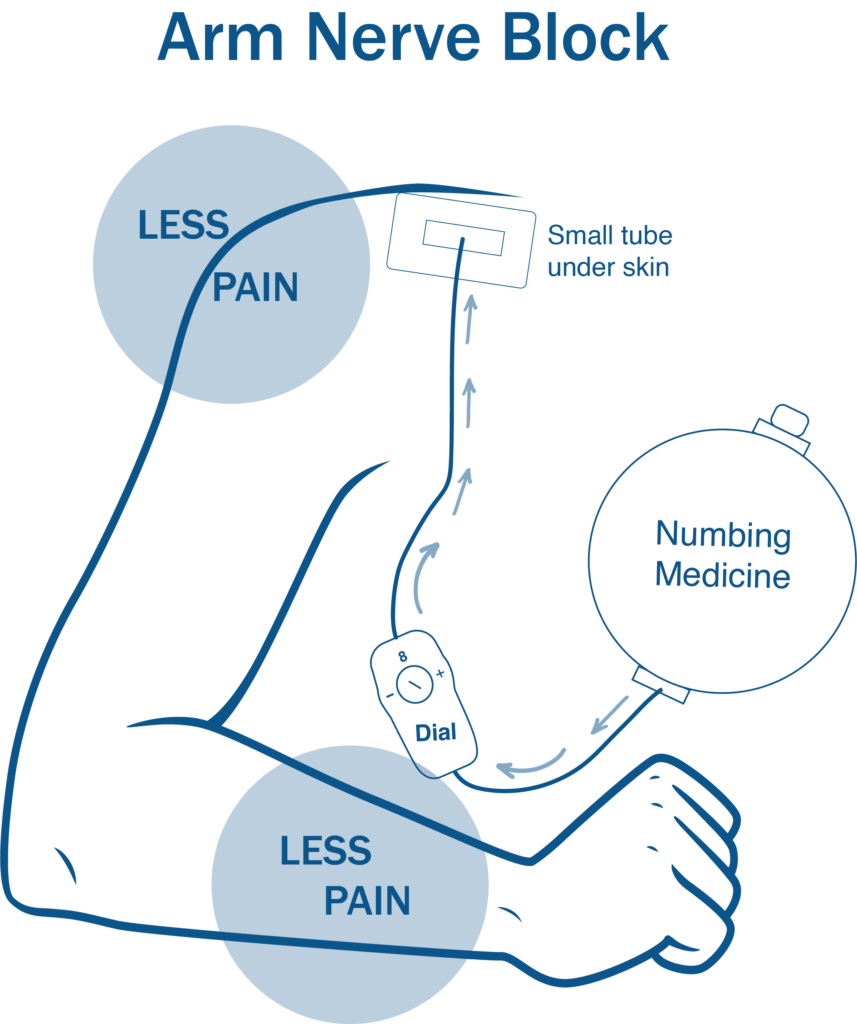
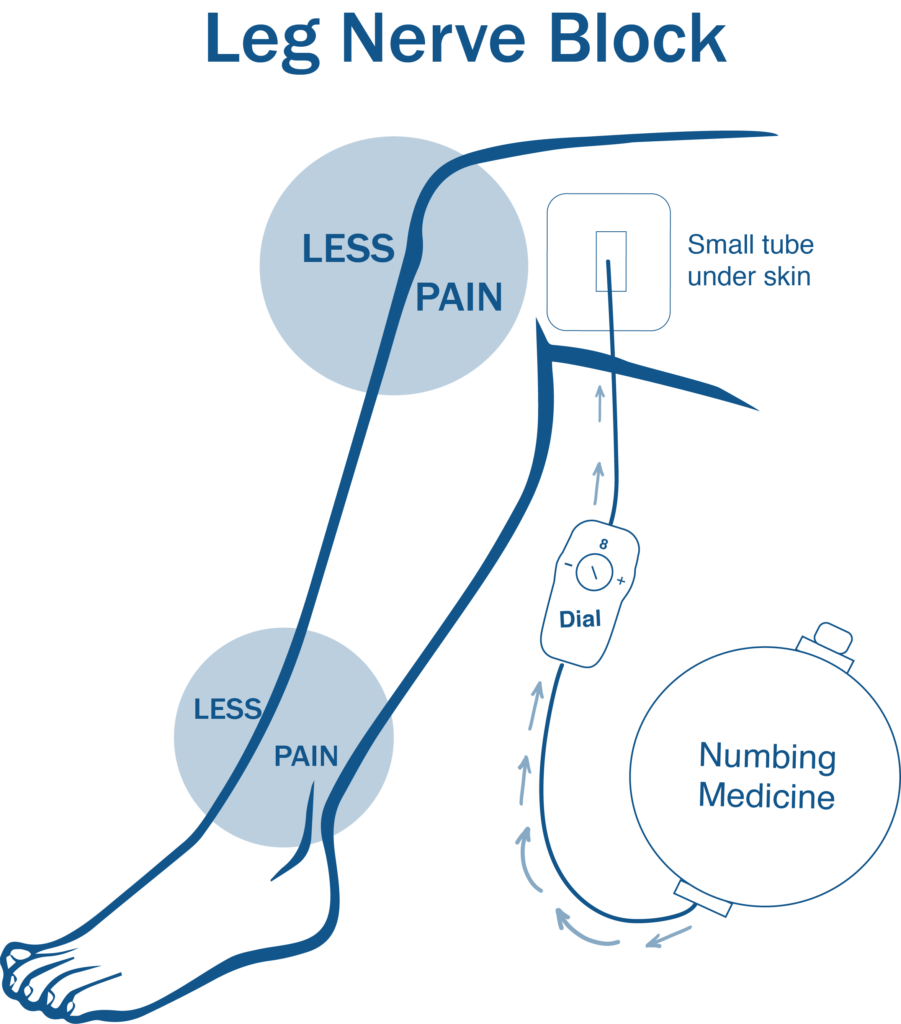

Pain expectations after surgery
- Some amount of pain is to be expected.
- Take a dose of pain medication before going to sleep.
- The nerve block may not cover the entire surgical site.
- Your extremity will be numb and/or weak for the next 2-3 days.
- Pad and protect your numb extremity.
- The infusion pump will last for 2-3 days. See below for more pump info.

Start your pain medication today
You were initially given a more concentrated numbing medication day of surgery. This dense block wears off between 8 and 24 hours. Start you oral pain medication before the strong nerve block wears off.
Pain medication instructions
[su_expand height=”10″]
- Take your prescribed pain medications at regular intervals for the first 2-3 days after surgery.
- Take pain medications with a small amount of food to avoid stomach upset.
- Many prescribed pain medications contain acetaminophen (Tylenol).
- If taking isolated Oxycodone, you are allowed to take acetaminophen (Tylenol).
- The maximum acetaminophen daily dose for a healthy adult is 4,000 milligrams (mg).
- Please contact your surgeon’s office regarding prescription refills.
[/su_expand]
Nerve Block Infusion Pump (On-Q)
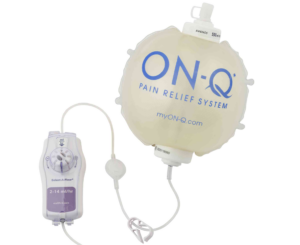
After 24 hours, you can increase or decrease the rate of the On-Q pump to make the block less or more dense.
On the second day, if your pain is well controlled, you may want to begin weaning the infusion rate down.
Weaning the rate down will prepare you for the discontinuation of the infusion.
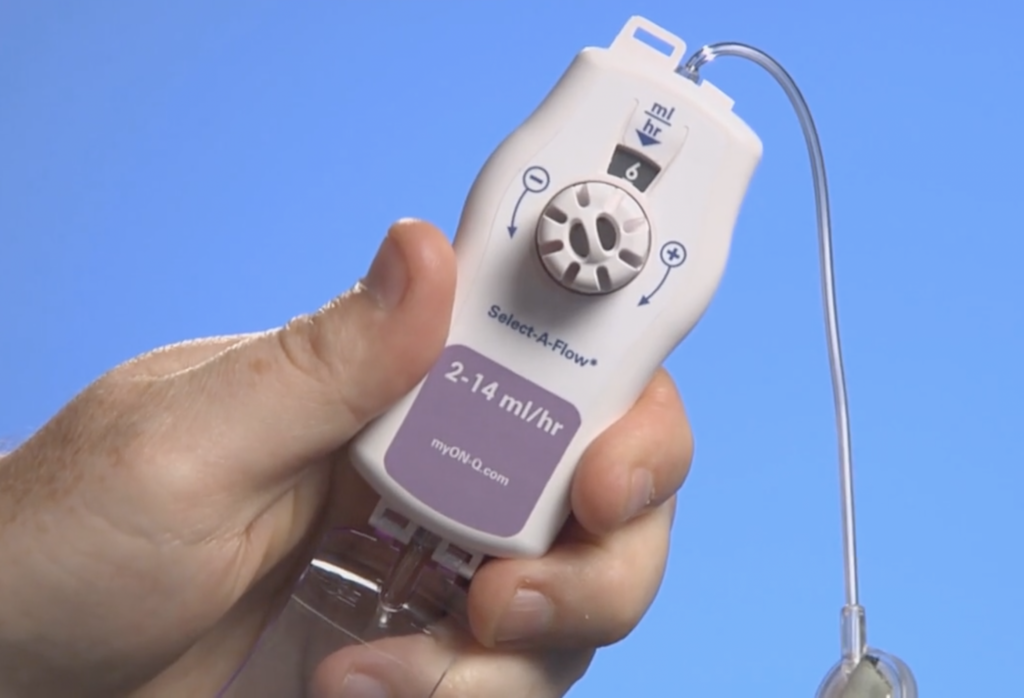
The infusion pump will last 2-3 days. The ball of fluid will shrink in size.
The size of the pump may appear to be the same size in the first 24 hours. This is normal. The infusion rate is very slow.


Caring for the nerve catheter
[su_expand height=”10″]
- Leaking of clear or blood-tinged fluid at the dressing site is normal.
- Small air bubbles in the tubing are normal.
- Reinforce with tape or gauze.
- Keep the catheter site dry.
- No showers or running water over site while catheter is in place.
- Occasionally the catheter will fall out or be pulled out by accident. If this occurs, make sure that your have taken your oral pain medication as prescribed.
[/su_expand]
Arm nerve block side effects
[su_expand height=”10″]
- You may not be able to move your fingers or hand until the block wears off.
- Temporary facial droop (same side as nerve block)
- Pupil size difference (same side as nerve block)
- Inability to take a deep breath
- Hoarseness
[/su_expand]
Leg nerve block side effects
[su_expand height=”10″]
- You may have a weak quad or thigh muscle.
- You may not be able to move your toes or foot until the block wears off.
- Only bear weight if directed by your surgeon.
- To prevent falls, only get up with assistance.
[/su_expand]
When to call the anesthesiologist
[su_expand height=”5″]
If you develop any of the following symptoms you should turn the OnQ dial to “zero” or close the white clamp off and call the anesthesiologist immediately.
- Numb lips
- Metallic taste in mouth
- Ringing in ears
- If fingers/toes are not pink
- Redness, swelling, severe pain at site
- Dizziness
- Severe shortness of breath
- Sudden unexpected sleepiness
Call 911 right away if you have chest pain or any sudden severe pain in operative extremity.
[/su_expand]
How to remove the nerve catheter
- Wash hands.
- Peel off the clear tape and dressing.
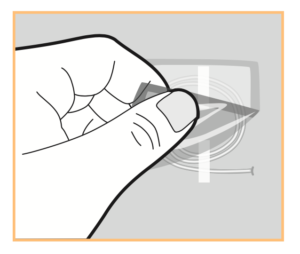
- Gently pull the catheter out from the skin. There may be some surgical glue at insertion site.
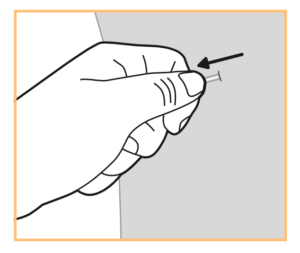
- When the catheter is completely out, there will be a blue or black tip at end of tubing.

- Discard pump and tubing into trash.
- You may see a small amount of clear fluid once removed. No band aid or gauze is necessary.
Troubleshooting
How to reinsert the catheter (thin tube) into the yellow port.
- Wash your hands.
- Find the yellow port.
- Remove any remaining tape.
- Anchor a finger under the side of the yellow port.
- Snap open the clear top by applying pressure to the yellow end.
- Set aside.
- Clean off the thin nerve catheter tubing.
- Reinsert the thin tubing until you feel resistance.
- Close the clear top.
- Once reconnected, restart the infusion. Please check that the line is unclamped.
Questions? Contact the anesthesiologist:
[su_accordion class=””]
[su_spoiler title=”Ascension Seton Medical Center” open=”no” style=”simple” icon=”plus” anchor=”” anchor_in_url=”no” class=””]512-748-0188[/su_spoiler]
[su_spoiler title=”Dell Seton Medical Center at the University of Texas” open=”no” style=”simple” icon=”plus” anchor=”” anchor_in_url=”no” class=””]6am-2pm 512-796-7081
after 2pm 512-375-8017[/su_spoiler]
[su_spoiler title=”Ascension Seton Hays Hospital” open=”no” style=”simple” icon=”plus” anchor=”” anchor_in_url=”no” class=””]512-848-2563[/su_spoiler]
[su_spoiler title=”Ascension Seton Northwest Hospital” open=”no” style=”simple” icon=”plus” anchor=”” anchor_in_url=”no” class=””]512-848-0366[/su_spoiler]
[su_spoiler title=”Ascension Seton Williamson Hospital” open=”no” style=”simple” icon=”plus” anchor=”” anchor_in_url=”no” class=””]512-486-9306[/su_spoiler]
[su_spoiler title=”Ascension Seton Southwest Hospital” open=”no” style=”simple” icon=”plus” anchor=”” anchor_in_url=”no” class=””]512-748-0188[/su_spoiler]
[su_spoiler title=”Dell Children’s Medical Center” open=”no” style=”simple” icon=”plus” anchor=”” anchor_in_url=”no” class=””]512-791-3316[/su_spoiler]
[su_spoiler title=”Cedar Park Regional Hospital” open=”no” style=”simple” icon=”plus” anchor=”” anchor_in_url=”no” class=””]512-750-1848[/su_spoiler]
Anesthesia billing questions? click here